
Redefining Robotics with AI and Seven Degrees of Freedom
AI is reshaping industries and transforming daily life by automating tasks, enhancing decision-making, and unlocking new capabilities and efficiencies.
Robotics is no exception to this revolution, and as pioneers in robotics and AI, Flexiv has consistently been at the forefront of breakthroughs that empower our range of adaptive robots.
Our robots don't just keep pace with innovation; they define it.
To learn more about our industry-leading 7-axis adaptive robots, please click here.
So, want to discover how AI is transforming robotics and how Flexiv is shaping the future? Read on.
What is a 7-Axis Force-controlled Robot Arm?
At first glance, most robotic arms appear similar, but beneath the surface, critical differences define their capabilities.
One of the most important is the number of joints, or degrees of freedom (DoF).
Degrees of freedom allow a robotic arm to contort itself into a wide range of positions.
Your own arm has 7-DoF. Three at the shoulder, one at the elbow, and three at the wrist.
Most traditional collaborative robots, or cobots, only have 6-DoF.
Flexiv’s Rizon adaptive robots, however, match the human arm's 7 DoF, granting them human-like fluidity and control. If your own shoulder lost a degree of freedom, imagine how much harder everyday life would be!
The same is true for robots.
This redundancy, or “extra” degree of freedom, provides our Rizon series adaptive robots with unmatched dexterity and adaptability.
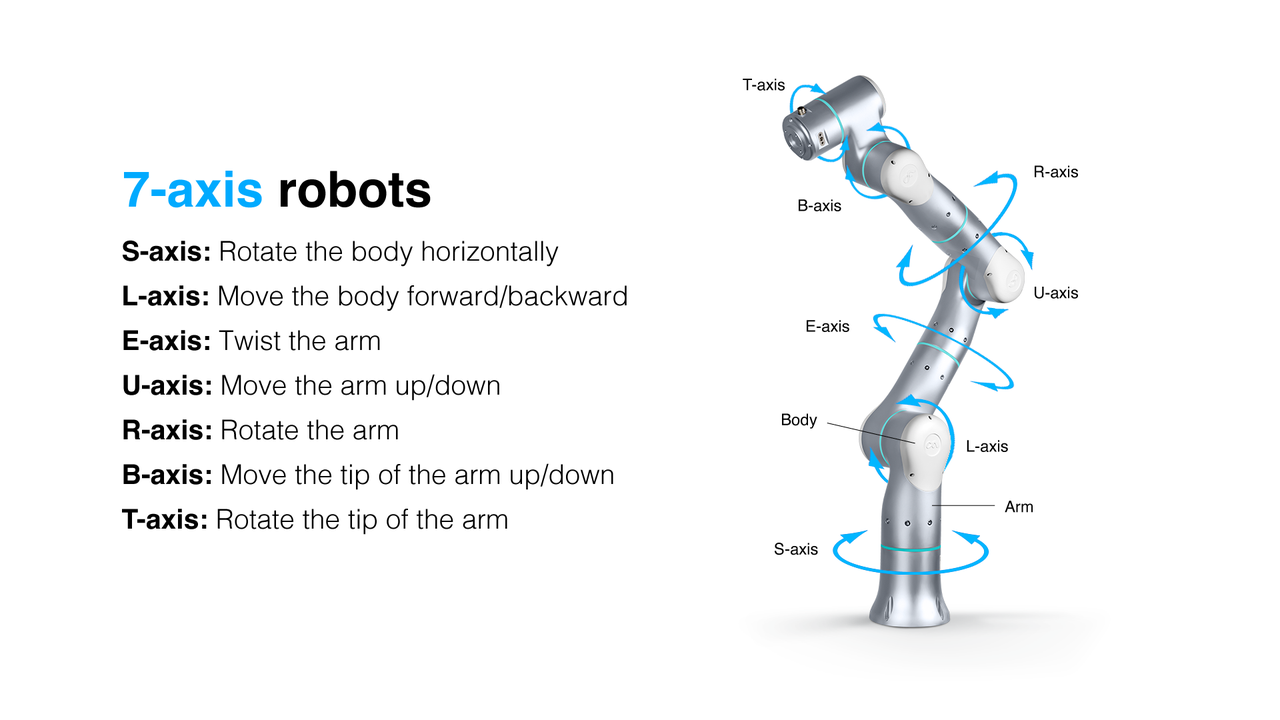
A 7-axis robotic arm makes complex, human-like movements effortless, especially in tight or congested spaces.
This unlocks tasks across multiple industries, including:
1. Welding and Machining
2. Precision Assembly
3. Machine Tending
4. Surgical Assistance
5. Laboratory Automation
6. Logistics and Warehousing
7. Painting and Coating
8. Material Abrasion
By mirroring the human arm, Flexiv's Rizon robots are not just tools, they are the next evolutionary step in automation.
The Power of Artificial Intelligence in Robotics
Mobility without intelligence is pointless.
The true power of robotics lies not only in movement, but also in the ability to understand and adapt. This is where AI comes into play.
Think of it like this: a traditional robot that doesn't utilize AI can only do exactly what it has been pre-programmed to do.
Like a train without a driver, it follows a track exactly.
Now imagine that there is a boulder on the track. The train can only crash into it.
In robotics, this “boulder” could take the form of a misaligned workpiece, a person bumping into the robot, or external interference such as vibration.
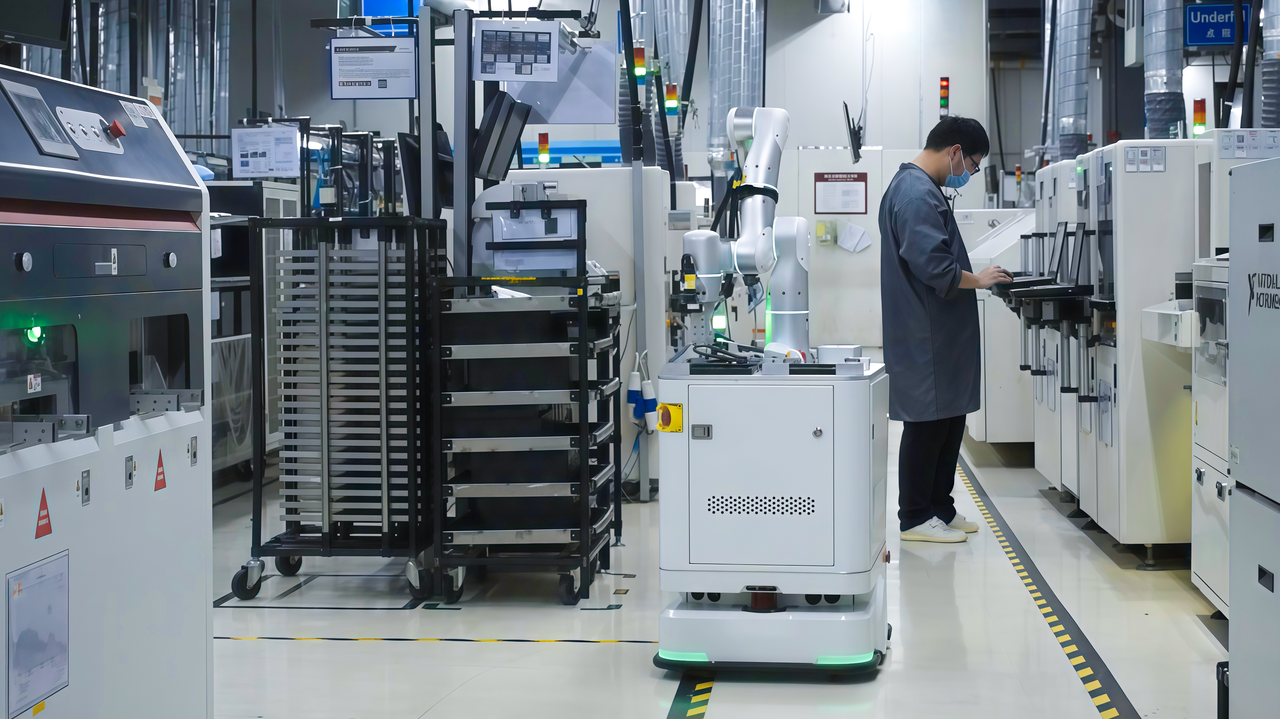
Now, instead of a train on a track, imagine a car on a highway. The driver can see the obstacle, understand how to avoid it, and then reach the destination. It really is that simple.
Flexiv integrates computer vision, force sensing, and AI into its Rizon series 7-axis robotic arms to create truly intelligent machines.
These robots can “see” their environment, categorize objects, detect defects, and refine their own movements in real time. They learn, adapt, and improve, task after task.
When combined with Flexiv's industrial-grade force control, AI empowers our robots to sense delicate changes, correct misalignments, and replicate human touch with precision.
From inserting fragile components to adjusting pressure with surgical accuracy, these are capabilities that redefine what robots can achieve.
AI essentially gives a robot the ability to react to changes in its environment without human intervention. When this is combined with reinforcement learning, either in real life or in a virtual environment, robots can acquire new skills and operate more safely around humans.
This is not theoretical. It's happening today inside factories that operate our robots.
Human-Like Adaptability in Action
Complex, unpredictable environments have always been the barrier to widespread automation.
With AI, force sensing, and 7 DoF, Flexiv has broken down this barrier to adoption, making tasks that require human-like adaptability a reality.
Take our automated massage solution, for example. With 100% hands-off operation, it enables fully customized massages to be provided with no human input or oversight required.

In our massage application, the robot completes three core steps:
-
Sensing
Computer vision provides a broad overview of the massage area, while ultra-sensitive force probing verifies the body’s contours, the spine, and zones of tension.
-
Processing
AI models process the data, identify safe and effective pathways, and create an optimal massage plan tailored to the user.
-
Execution
The Rizon 7-axis, force-controlled robotic arm then follows the pathway, while monitoring real-time force feedback, to ensure a consistent, safe, and personalized massage.
Unlike 6-axis models, which must be repositioned, Flexiv's seventh axis allows seamless, graceful, human-like movement around the body.
Our massage application demonstrates more than simply automating a task. It shows that human adaptability can be replicated safely, reliably, and consistently.
Flexiv’s Rizon robots are already automating the impossible.
If you’d like to learn more about our Rizon adaptive robots, please click HERE.
The Future of Robotics and AI
Artificial intelligence and robotics are converging to redefine automation.
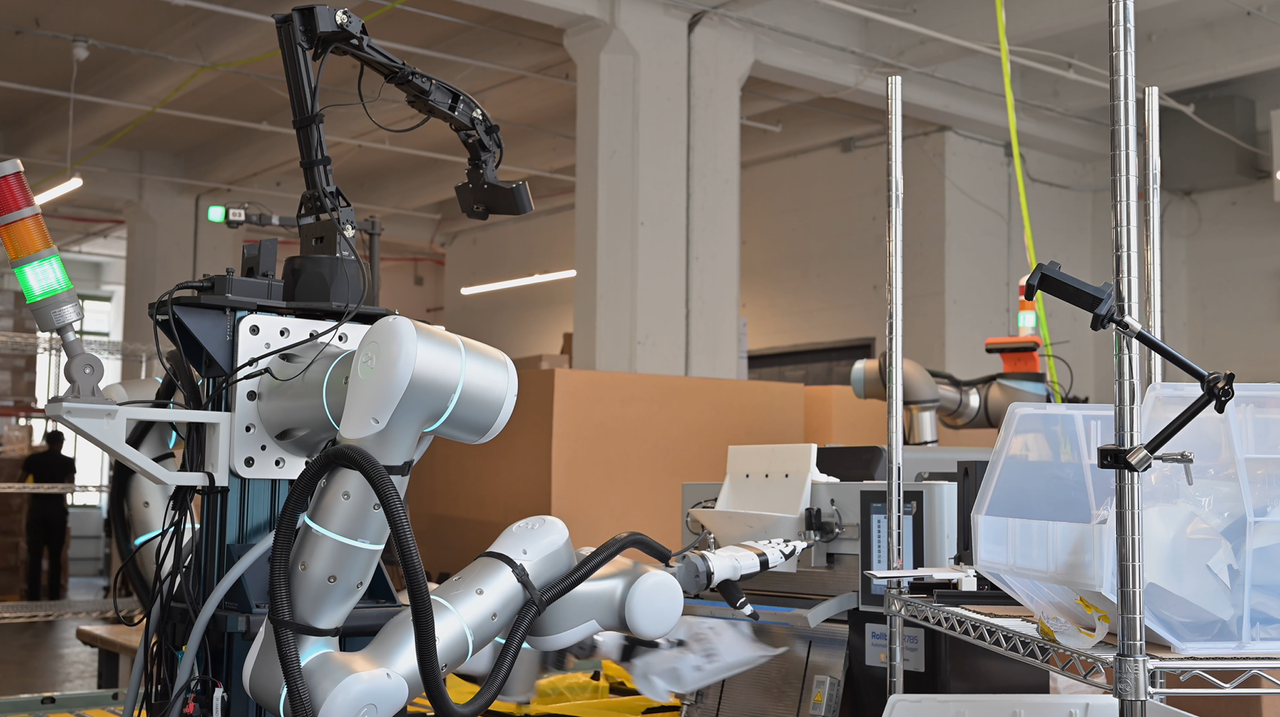
Breakthroughs in deep learning, natural language interfaces, and force control will not only drive widespread adoption but also make it possible to automate practically any task.
This means that in the not-too-distant future, the only barrier to robotic use will be based on human sensibilities rather than a technology gap. Having a robot stock the shelves of a local supermarket will, after all, be far easier to accept than having a robot look after children in a kindergarten!
Next-generation AI models will process sensory data, in the form of vision and touch, in real time, and then predict trajectories or logical outcomes, enabling them to operate in highly dynamic environments with unmatched safety.
Picture humanoid or quadruped robots navigating city streets, assisting in hospitals, or supporting disaster relief efforts.
Advancements in natural language processing will also allow robots to respond not just to commands but to human intent, tone, and even emotion. This will transform collaboration from mechanical execution into a more intuitive partnership.
Fictional robots from film and television like C-3PO, Data, and even those seen in Westworld are closer than you imagine.
Flexiv is building the bridge between imagination and reality. While our adaptive robotic arms may not look like the androids of tomorrow, the hardware and software that go into them very much are.
Final Thoughts
AI, force control, and 7-axis robotic arms are not just an incremental improvement, they are the foundation of a new industrial and social revolution.
Flexiv has already deployed robots that perform delicate, skill-intensive tasks once reserved for people, and as we continue to push the boundaries of what’s technically possible, our robots will expand beyond factories into customer-facing industries such as healthcare, hospitality, and service.
At Flexiv, we're not waiting for the future. We’re creating it.
Want to discover how Flexiv can help your business? Please visit: www.flexiv.com/case-studies
Or connect directly with one of our automation experts: https://www.flexiv.com/contact


